
Round downpipes
The traditional, most common profile. A soft, familiar look that suits period and modern homes alike, and pairs with half-round guttering.
The downpipe is the last leg of the journey water takes off your roof, the vertical run that carries everything your gutters collect down to the drain. Get it wrong and water pools against the wall; get it right and it vanishes underground. We install, repair and replace downpipes that drain cleanly and finish the roofline neatly.
Downpipes are the quietest workers on the whole house. A gutter announces itself when it overflows, but a downpipe can be slowly failing, a loose bracket here, a hairline blockage there, and give almost nothing away until a damp patch appears on the wall behind it. Yet their job matters: taking the water the guttering has gathered and getting it clear of the building before it does harm.
Here you will find what a downpipe does, the choice between round and square, how the number and placement are worked out, where the water ends up, and the signs yours need attention.
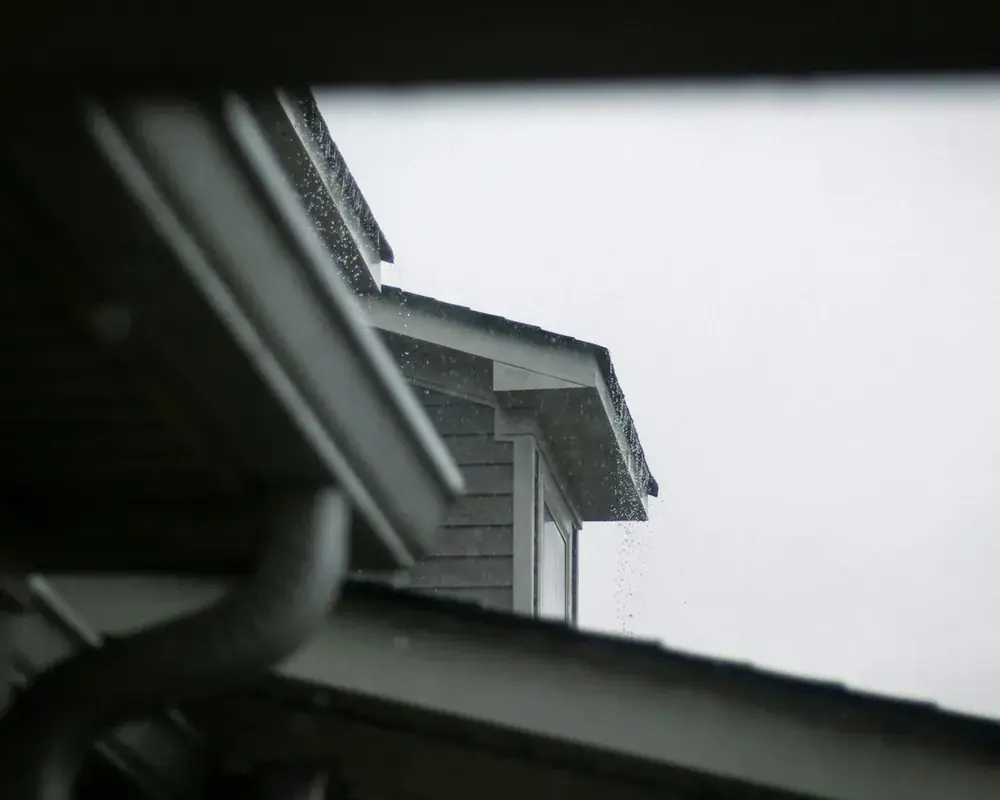
A downpipe is the vertical pipe on the outside wall that carries rainwater down from the gutter to ground level. Water gathers in the gutter, runs to an outlet, drops into the pipe and travels down to a drain, gully, soakaway or water butt.
It is made up of pipe lengths, the brackets that hold it to the wall, and the bends, shoes and offsets, that route it around the eaves. Simple as it looks, it has to be sized, fixed and placed well to drain without splashing or coming loose.
Like guttering, downpipes come in two profiles. Both drain just as well, so the choice is about looks and matching the gutter above.
The traditional, most common profile. A soft, familiar look that suits period and modern homes alike, and pairs with half-round guttering.
A sharper, contemporary line with flat faces. Square pipes complement squareline guttering and suit newer builds or anyone after a crisper finish.
A single downpipe can only move so much water. If a long run or large roof drains into one pipe, the gutter backs up and overflows however well it is fitted. The question is how much water the system sheds, then how many pipes, and where, to clear it fast enough.
Placement matters too. Pipes run down walls to a suitable drainage point, clear of paths and doorways where splashing would be a nuisance; on awkward layouts, offsets and bends carry them around obstacles.
Worth knowing: if your gutters overflow only at one end, the cause is sometimes too few downpipes or a badly placed outlet, not a blockage, and rethinking the drops can solve what cleaning never will.
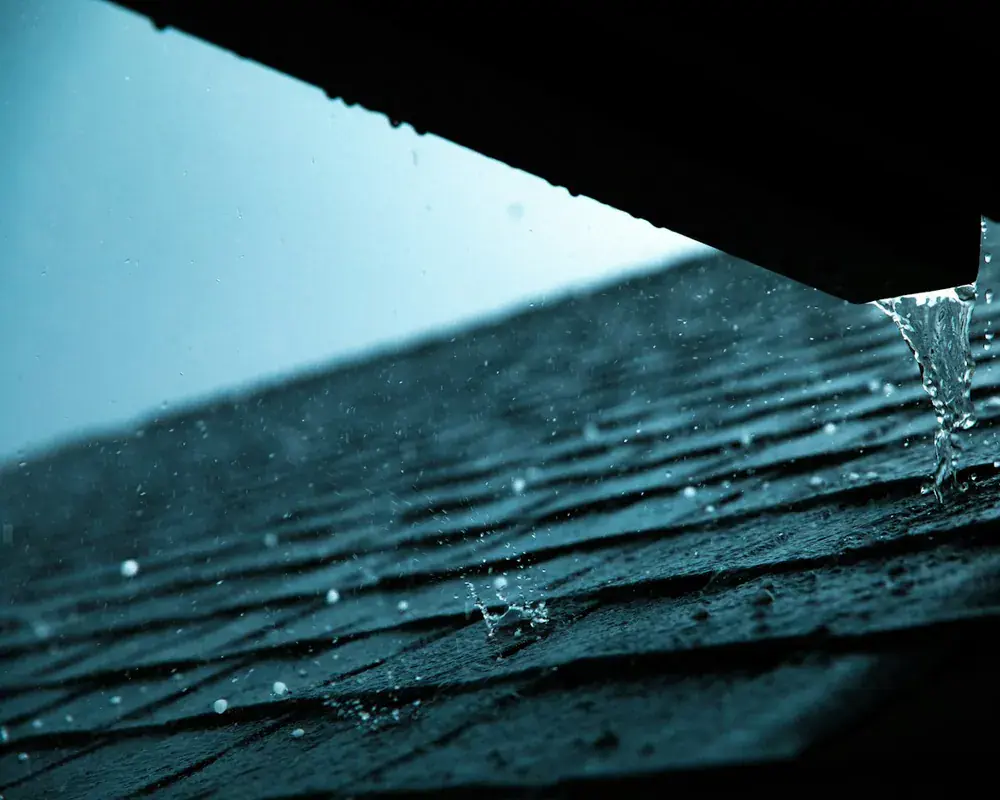
Where the water ends up depends on the property and the drainage already there. A downpipe might connect into an underground drain, discharge into a gully, feed a soakaway in the garden, or divert into a water butt for reuse.
Getting this right matters as much as the pipe. A downpipe that just ends above the ground soaks the base of the wall and the foundations, so we make sure the foot of the run drains away properly.
Downpipe problems are easy to miss, so glance over them now and then, especially in the rain.
A pipe that rattles or hangs off the wall can pull apart at the joints.
Water escaping midway down points to a loose connection or a crack.
Damp streaks or algae behind the pipe show water going astray.
Leaves and silt jam the pipe or its bends, backing the gutter above up.
Water at the foot of the pipe suggests a poor connection or a blocked drain.
Old plastic goes brittle and splits, especially at bends and in sun and frost.
Most downpipe work is straightforward, but a couple of features are worth knowing.
A hopper head is a wider, funnel-shaped fitting at the top of a downpipe. It gathers water from one or more inlets, such as a gutter outlet or an overflow pipe, and feeds it into the pipe below. Hoppers suit layouts where several flows meet, and on older properties they double as a decorative feature.
Downpipes come in the same colour range as guttering and fascias, so the run blends in. Match the pipe to the gutter in white, black, anthracite grey or woodgrain, and the exterior looks coordinated.
Instead of a headline price that cannot fit every property, here is what shapes it.
We put it all in a written quotation after assessing the property, so you know what is included.
Round downpipes are the traditional choice and suit most homes and half-round guttering. Square downpipes give a crisper, more modern line and pair with squareline guttering. Both work equally well; the decision is mostly about the look and matching the gutter.
It depends on how much water the gutters have to shed and the layout of the property. A long gutter run or a large roof usually needs more than one downpipe to drain away quickly enough. We position them against walls and near suitable drainage points.
Depending on the property, a downpipe may connect to an underground drain, discharge into a gully, feed a soakaway in the garden, or divert into a water butt for reuse. The right connection depends on the existing drainage and the site.
The channels that feed your downpipes. The two are specified as one system.
Guttering servicesThe board carrying the guttering above your downpipes.
Fascia servicesLoose brackets, blockages and splashing pipes put right without replacing the whole run.
Repairs & maintenanceSee how we work on our installation process page, or browse the materials & finishes.
Tell us what you are seeing and we will arrange a no-obligation assessment and a clear written quotation.