
Fascias
The board the soffit meets at the eaves, almost always renewed with it.
Fascia servicesThe soffit is the board under the roof overhang, the one you look up at from below the eaves. It seals the underside of the roof edge and, when ventilated, lets your roof space breathe. We install and replace ventilated and solid soffits that keep the roof dry and the finish neat.
If the fascia is the board you notice, the soffit is the one you forget. It sits underneath, out of sight, closing the gap beneath the overhanging roof and letting the roof space breathe. Get it wrong and you invite condensation, damp timber and uninvited visitors into the loft.
Below is what a soffit is, why ventilation matters, how to spot a failing board, and your choices when it is time to renew, work nearly always handled alongside fascias and guttering.
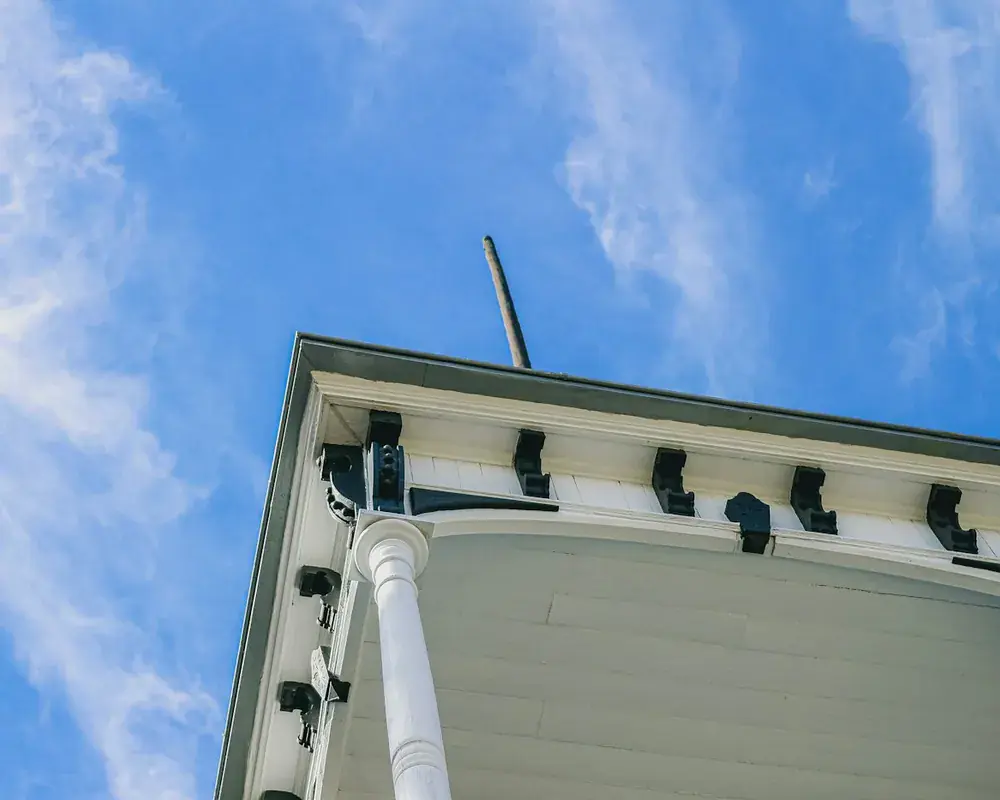
A soffit is the horizontal board closing the underside of your roof overhang, between the wall top and the bottom of the fascia. Stand under the eaves and look up: that board is the soffit. It hides the rafter feet and keeps rain and wildlife out of the gap.
It has a second job, too: airflow. The soffit is the natural place to let fresh air into the roof void, so a cracked, sagging or blocked board stops doing both jobs at once.
This is the part most people never think about, and the part that does the most good when it is right.
Ordinary life makes a lot of moisture: cooking, washing, drying clothes, even breathing. That warm, damp air rises into the roof space, and with nowhere to go it condenses on the cold underside of the roof, soaking insulation, staining ceilings and, in time, rotting the timbers.
Ventilated soffits give the void a way to breathe: air is drawn in at the eaves and escapes higher up, carrying the moisture with it. When we renew soffits, we check how your roof breathes now and keep that airflow rather than sealing it off.
A quick note: ventilation needs vary from roof to roof. We assess what yours requires rather than applying a single rule.
Soffits sit overhead and out of mind, so trouble often goes unnoticed. Here is what to look for.
They let damp in and give insects and birds a route into the roof.
A board dropping or bellying down has taken on moisture or lost support.
Dark patches point to trapped moisture or poor airflow above.
Wasps, birds and squirrels at the gaps mean the edge is no longer sealed.
Peeling paint on older timber shows the surface has stopped protecting it.
Damp insulation or droplets on the timbers can mean blocked vents.
Soffits come in a couple of forms, and the choice turns on how your roof is already set up to breathe.
A ventilated soffit has a built-in airflow path, a perforated board or a continuous vent strip, that draws air into the roof on its own. A solid soffit is a plain, unvented board, fine where the roof breathes elsewhere and still ventable later with circular push-in vents. We check how your roof is ventilated now before recommending either.
Flat boards are a smooth sheet across the overhang; hollow, box-profile boards have a tongue-and-groove look and suit deeper eaves. Both do the same job, so it comes down to eaves depth and the finish you prefer.
The soffit and fascia meet at the eaves and share access, so they are usually renewed together, often as part of a full roofline replacement, with one colour and profile across the roof edge and nothing disturbed later.
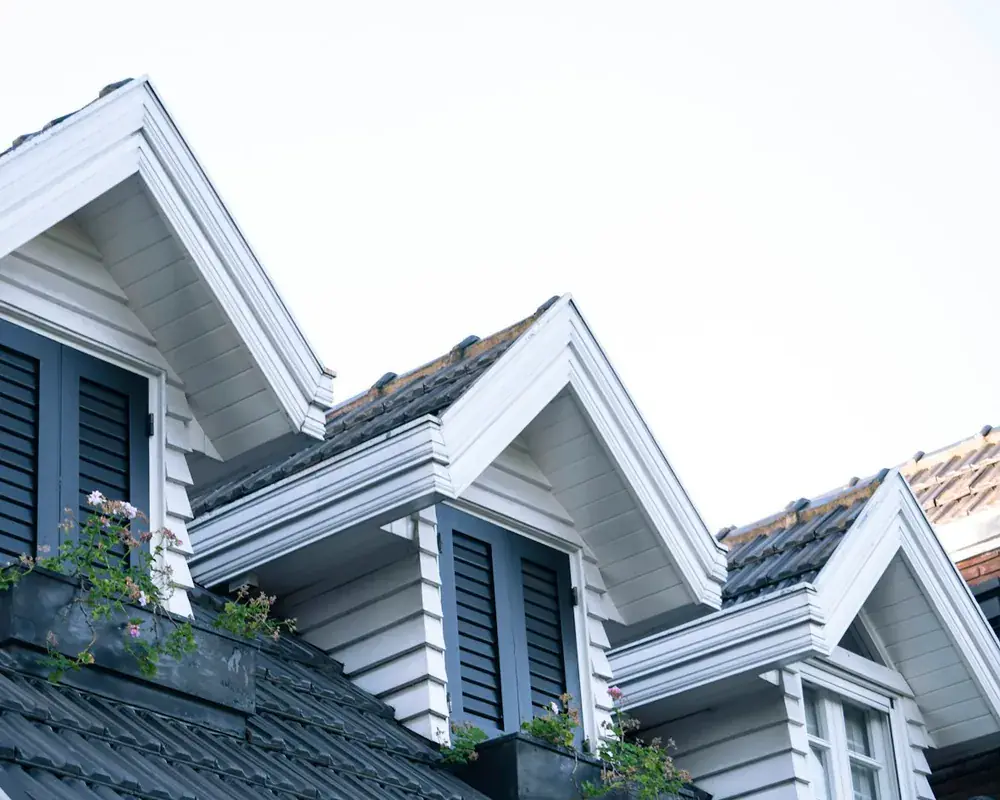
Modern soffits are almost always uPVC: light, weatherproof and maintenance-free, ideal for a board that is awkward to reach and easy to forget. They coordinate with matching fascias so the whole roof edge reads as one, and follow the same colour palette as the rest of the roofline, so you can keep it consistent or pick a deliberate contrast.
Rather than a number that cannot fit your roof, here is what makes the difference.
A written quotation after our assessment sets it all out, so there are no surprises once work starts.
A ventilated soffit has a built-in airflow path, a perforated board or a vent strip, that lets air into the roof. A solid soffit is plain and unvented, but can still be ventilated with circular push-in vents. The right choice depends on how your roof is already ventilated.
Cracks and splits, sagging or bowing boards, flaking paint on timber, damp staining, and birds, wasps or squirrels getting into the roof edge. A soffit that has dropped or is crumbling is no longer sealing the roof space.
Yes. When renewing soffits we can improve the roof-space ventilation at the same time, either by fitting ventilated boards or by adding vents to solid ones. We assess how your roof breathes and recommend an approach that suits it.
Not always, but very often. The soffit and fascia meet at the eaves and share the same access, so renewing them together gives a consistent finish and avoids disturbing new work later. We will advise honestly if only one needs attention.
The board the soffit meets at the eaves, almost always renewed with it.
Fascia servicesSits above the soffit on the fascia line, completing the roof edge.
Guttering servicesSoffits, fascias and rainwater goods renewed together in one package.
Complete replacementLearn how we work on our installation process page, or compare the materials & finishes.
Tell us what you can see beneath your eaves and we will arrange a no-obligation assessment and a clear written quotation.